


I’m always looking for new and interesting ways to repurpose common household items, both for the creative challenge and because it’s important to me to use up things I already have at home before I commit to buying something new. There are tons of surprising uses for all sorts of household items, including the one we’ll be talking about today: sandpaper.
Those gritty sheets certainly come in handy for home improvement projects, but you’re only experiencing a fraction of how useful sandpaper can be if you only use it in your garage or workshop! Today I’ll be sharing 9 of the best ways you can put sandpaper to good use all around the house.
Enjoy, and I hope you find these uses for sandpaper as interesting and useful and interesting as I did! :-)
9 Surprising Uses For Sandpaper Around The House

1. Sharpen Dull Scissors
Are your scissors just not cutting it any more? To sharpen dull scissor blades, take a sheet of fine-grit sandpaper and cut across it several times with your scissors.
Not only will the abrasive sandpaper restore your scissors to proper sharpness, but it will also help remove any grime or sticky residue that may be clinging to the blades!
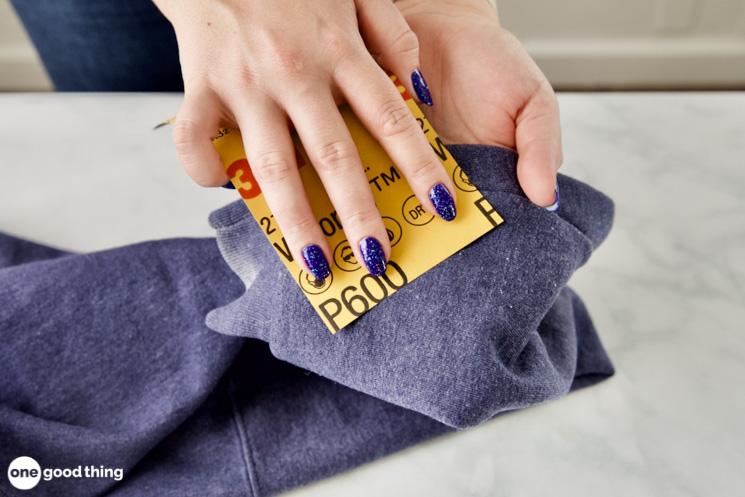
2. Remove Pills From Upholstery And Clothing
Lightly brush a scrap of fine-grit sandpaper back and forth over pilled upholstery to whisk away unwanted fuzz balls. The same goes for fuzz balls on your sweaters and other clothing—a few light strokes with sandpaper in one direction will take care of them!
(If you want to use sandpaper to remove pills from a more delicate fabric, do a spot test in a hidden area first to see how the fabric holds up before proceeding.)
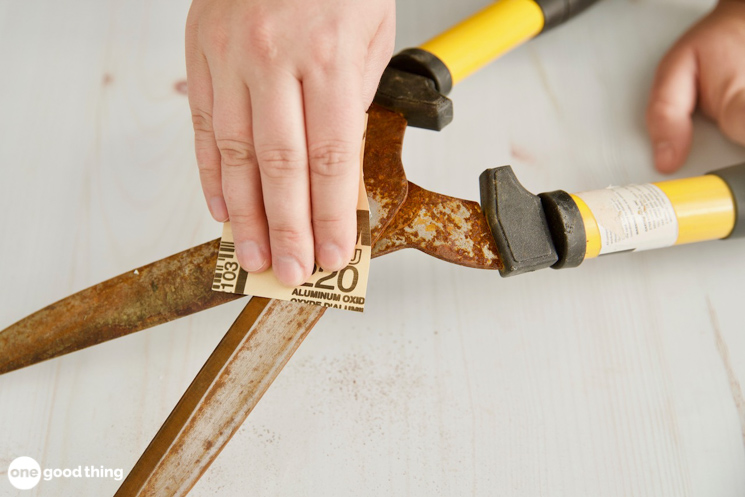
3. Remove Rust From Tools
Sandpaper can help you restore rusty hand tools to their former clean and functional state. The coarser the grit, the faster you’ll be able to remove the rust, but be aware that using too heavy a hand with coarse-grit sandpaper may result in scratch marks on your tools. (But I’d take scratch marks over rust any day!)

4. Improve The Traction Of New Shoes
Wearing a new pair of leather soled shoes can make any smooth surface feel as slippery as an ice rink. To improve the shoes’ traction and make it easier to stay on your feet, use a piece of coarse-grit sandpaper to scuff up the soles. It might just save you from taking a nasty spill!
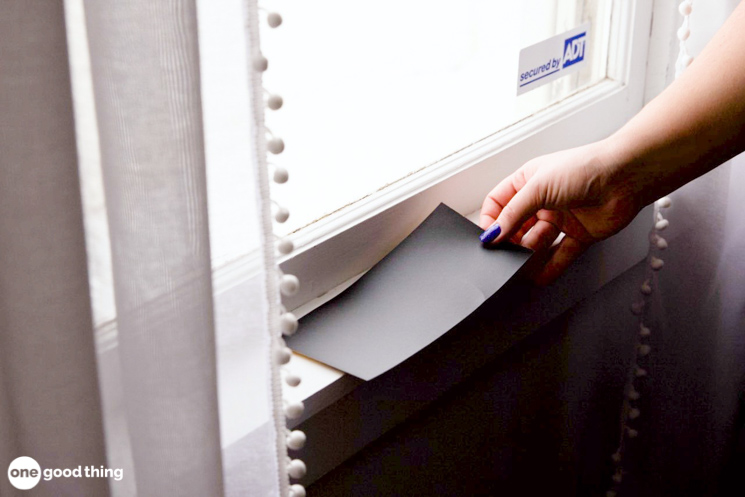
5. Deter Cats From Scratching Or Spraying
If your cat has been scratching up the same part of your sofa or spraying in a particular area, a little sandpaper may be enough to deter them. Cats don’t like the gritty feeling of sandpaper against their sensitive paws, so they’re likely to avoid an area where sandpaper is present.
To use this to your advantage, attach scraps of sandpaper to the piece of furniture your kitty has been scratching. For spraying, arrange scraps of sandpaper on the floor in the area where they’ve been spraying.
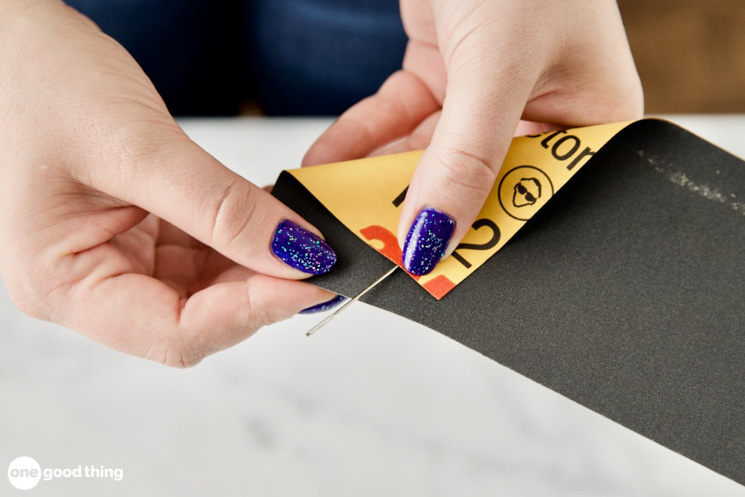
6. Sharpen Dull Sewing Needles
Small pieces of sandpaper are perfect for sharpening dull sewing and embroidery needles. Poke dull needles through a piece of sandpaper a few times, or fold the sandpaper around the point of the needle and twist. Either way, your needles will be sharp again in no time!
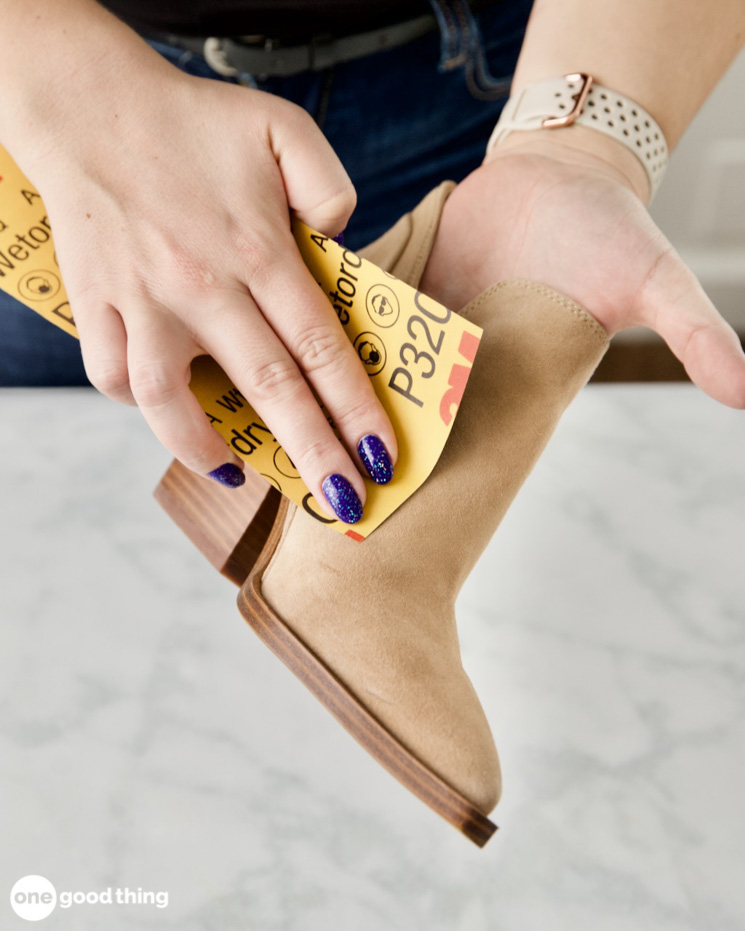
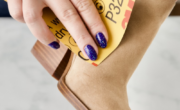
7. Restore Scuffed Or Stained Suede
Remove scuff marks and ink stains from suede by gently rubbing a piece of fine-grit sandpaper against the fabric. Afterward, use an old toothbrush or nailbrush to bring up the nap. It’s quick, easy, and could save you a trip to the dry cleaner!

8. Maintain Wood Cutting Boards
The little nicks and divots your kitchen knife makes in your wood cutting board are prime real estate for bacteria. Sanding down the surface of your cutting board once a year or so can help eliminate those hiding places and keep your board more hygenic.
More Ideas You'll Love

Use a fine-grit sheet of sandpaper and sand the surface of the board evenly. After sanding, wash the board with soap and water and then apply cutting board cream or some mineral oil moisturize and protect the wood. (This process also works well on wooden spoons and other utensils.)
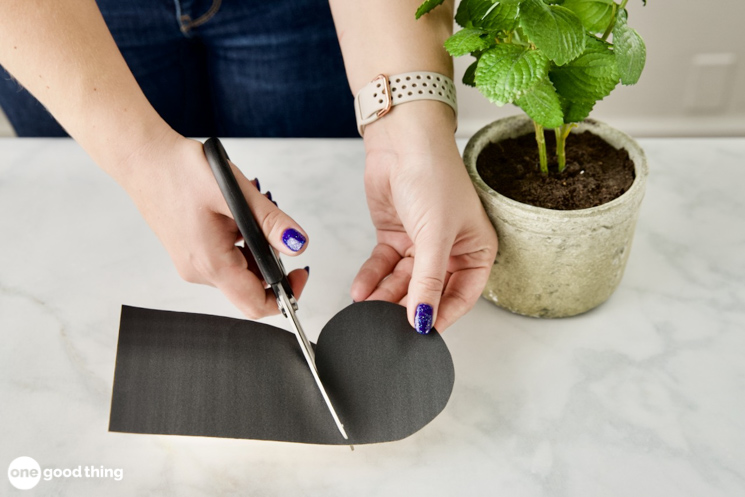
9. Keep Slugs Away From Plants
Slugs making a feast of your potted plants? Put used sanding disks or sheets of sandpaper under the bases of your pots, ensuring that the sandpaper is wider than the base. For your garden, cut rings of sandpaper out of a sheet and slip them around the stems of tender young plants to keep slugs at bay.
Do you have a favorite unconventional use for sandpaper?






For dull needles- I have the tomato, with the little strawberry hanging from it, pin cushion- the strawberry has pieces of sand paper in it to keep your needles sharp.
Please log in or create a free account to comment.Great tips! Some I knew, others I’d never thought of.
If you have those slick new shoes and can’t find any sandpaper the roughness of the sidewalk or driveway cement is a great way to scuff up the bottoms for traction. I’ve done that many a Sunday morning while my husband backed the car out of the garage when a new pair of shoes was too slick.
Please log in or create a free account to comment.Eve, that is interesting and I do clean it but I also use a peroxide spray if I cut any meat on it, especially chicken. Years ago when I took a tailoring course we were taught hand sewing for certain tasks and when a needle got a little bit dull you just rubbed it on your scalp and it worked. Not really sure how hygienic that is but it beat looking for the pin cushion with the sand in it. Another use for the finest sandpaper you can fine is cleaning a toilet that has those ugly hard water stains on them. First empty the bowl of standing water then sprinkle Bar Keepers friend all over the bowl. Take your sandpaper and where the rings are start scrubbing. Works like a charm. Thanks for all of the suggestions.
Please log in or create a free account to comment.Wooden cutting boards are said to be more hygienic than plastic or glass due to the fact that wood has antibacterial properties. If you scrub your wooden chopping board with cool water and detergent after use, it will self-disinfect overnight.
Please log in or create a free account to comment.I’ve read the same and that the wood cells can’t absorb the germ cells from meats and things making them naturally antibacterial when cleaned properly.
Please log in or create a free account to comment.Also, plastic boards tend to get cut marks, the surface feels rough and they get scruffy and dirty looking. I’ve wondered too, if the plastic comes off in tiny bits and gets in your food. I’ve only ever had one and I threw it out pretty quickly.